The Problem
Children with Dyslexia face multiple barriers when learning to read in a traditional classroom setting. Oftentimes, they may become unengaged and discouraged due to a lack of personalized resources and ineffective teaching methods.
The Solution
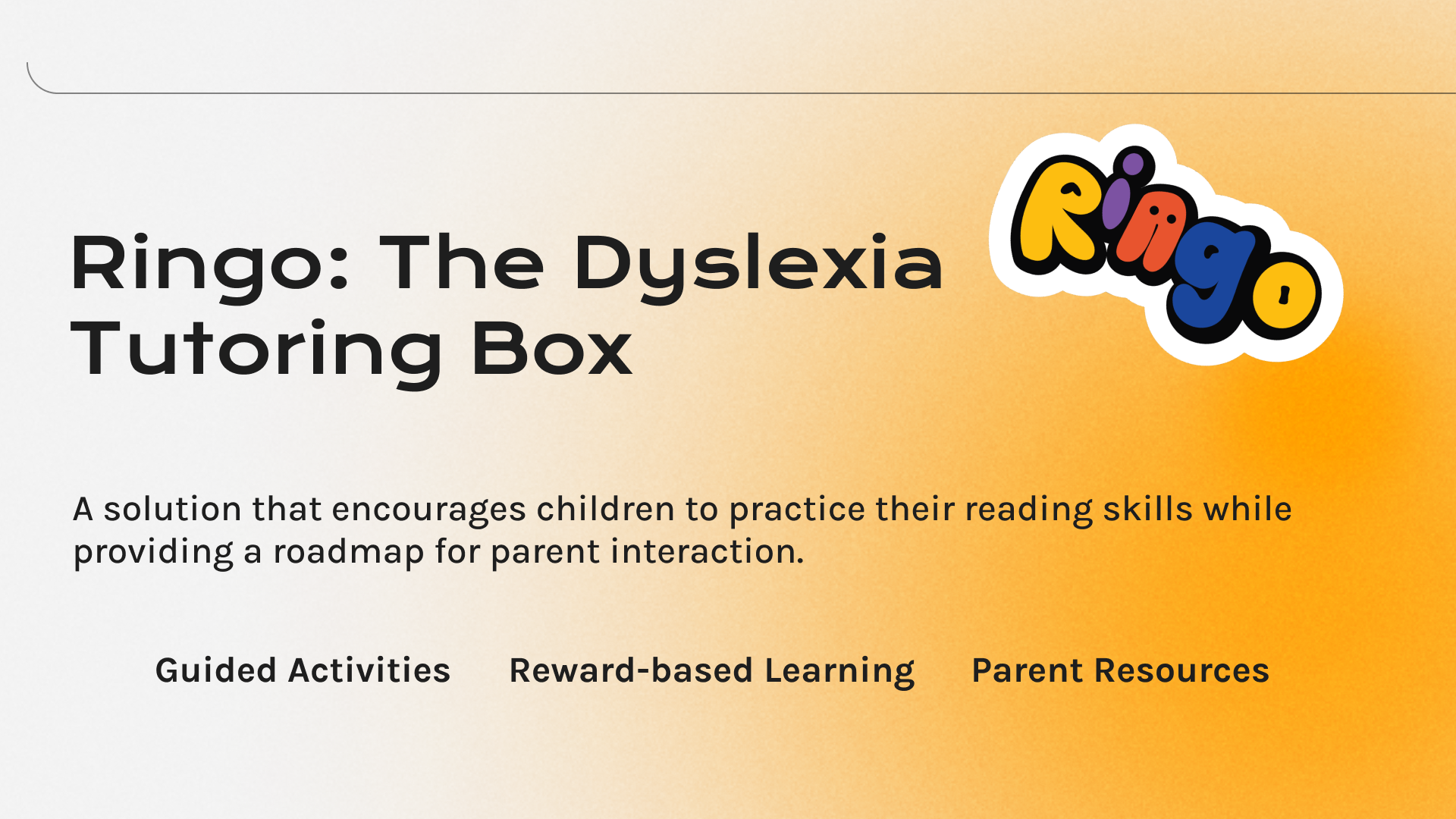
Ringo encourages children to practice their reading skills while providing a road map for parent interaction.
Overview
Empathize: Gathered insights and created empathy maps & personas.
Ideate: Using UX brainstorming methods, drafted various possible solutions.
Design: Created a prototype using Adobe Creative Cloud & Figma.
Iterate: Implemented changes based on peer and mentor feedback.
Feedback: Reflected on findings and conducted a sample run of the product.
Empathize
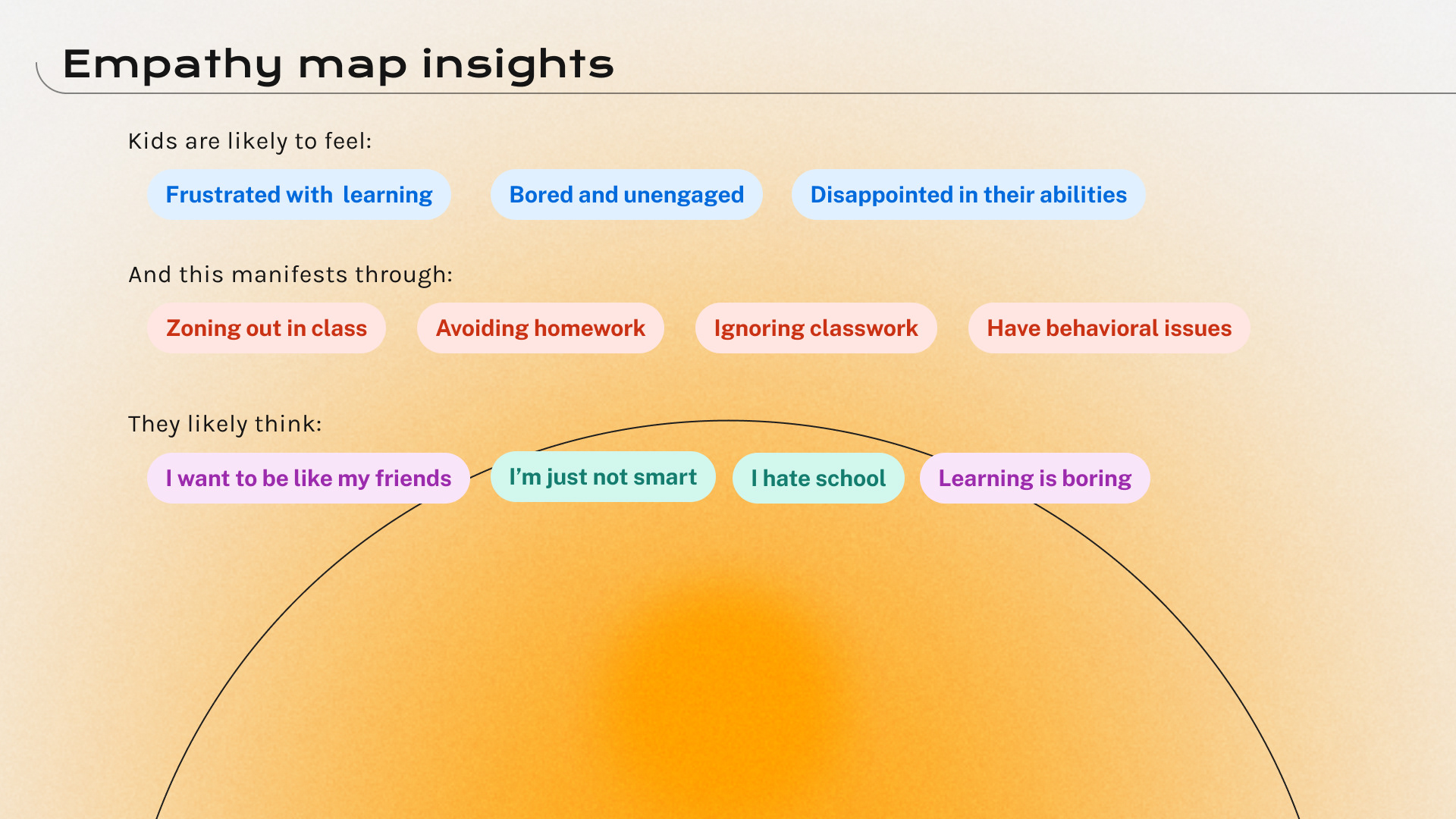
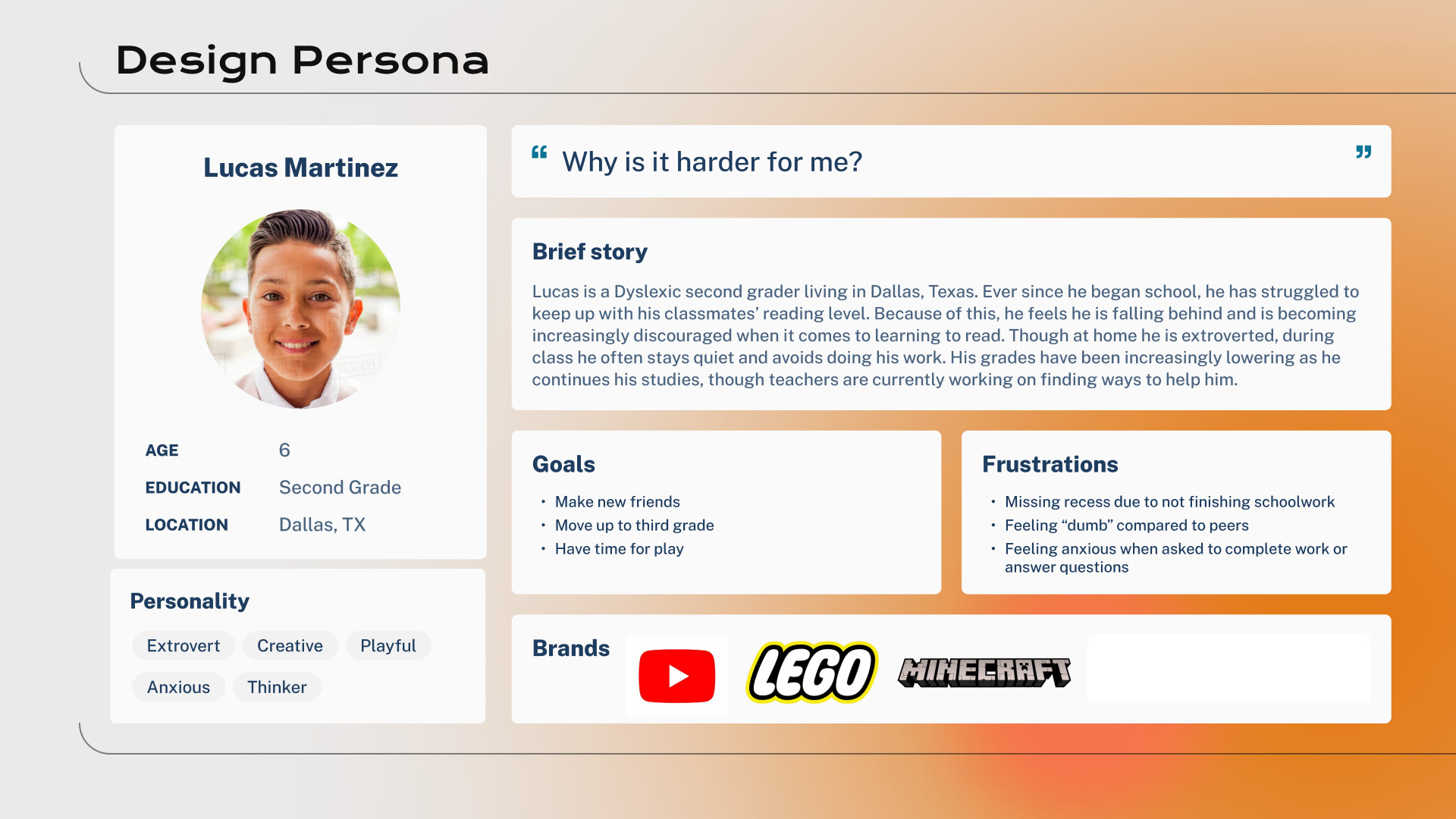
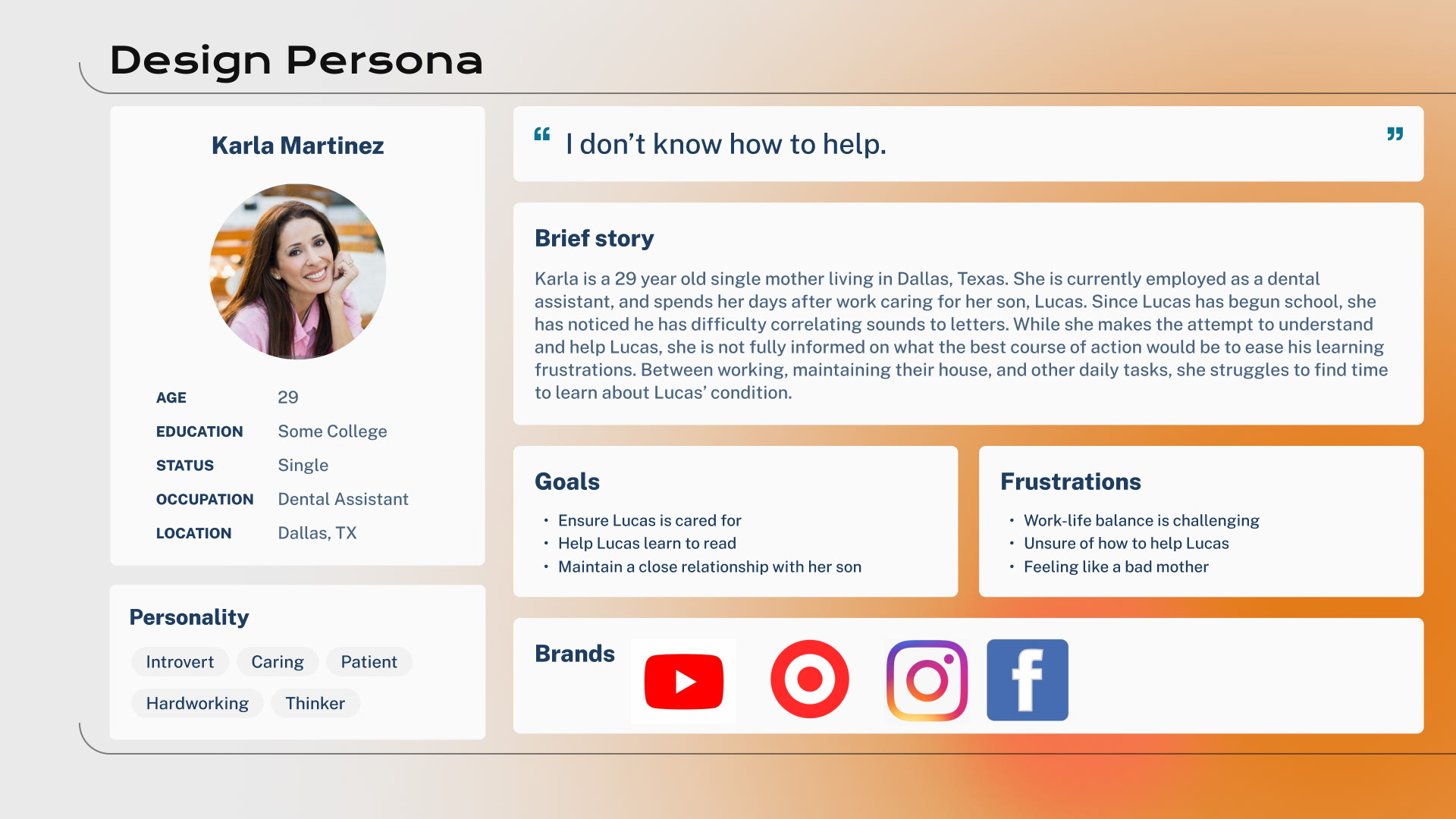
For this particular project, I had the opportunity to be very close to an individual with Dyslexia whom I could shadow. I spent weeks tutoring my nephew and sister, trying to understand how I could design a solution to help.
During this time, I also conducted interviews with various other people including other children with Dyslexia, adults who had been diagnosed within their grade school, parents of children in public school with learning difficulties, and an educational therapist. From these interviews, I gathered important insights to work toward understanding the problem.
Once I had gathered insights, I created design personas to encompass these insights.
Ideate
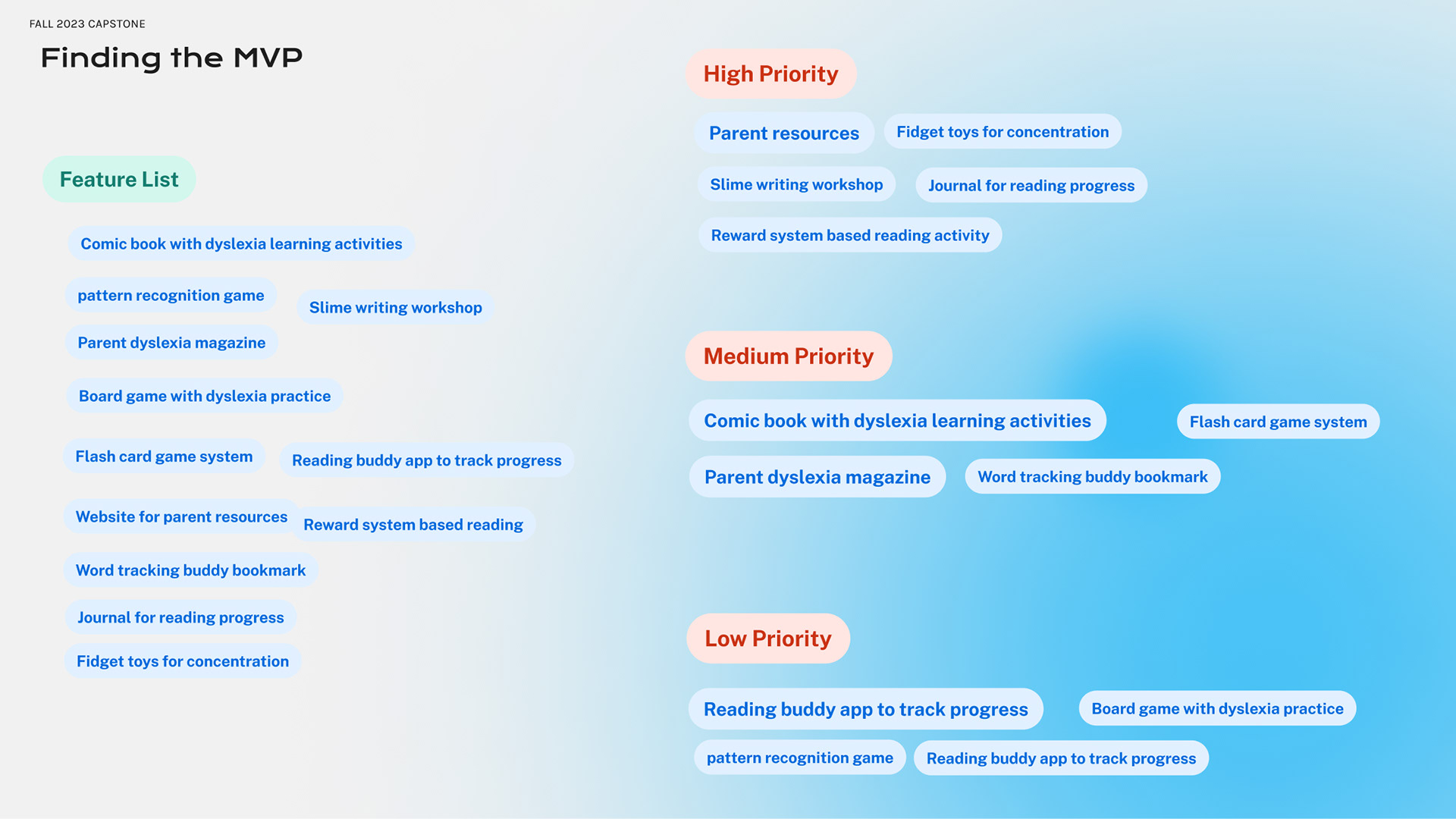
Following the research stage, various brainstorming techniques were used to explore possible solutions. These methods included "how might we", crazy-8's and future headlines. From these exercises, a feature list was created and sorted from priority level. The MVP was then formed from the highest priority features. These would go on to be included in the first prototype of the Ringo box.
Design & Prototype
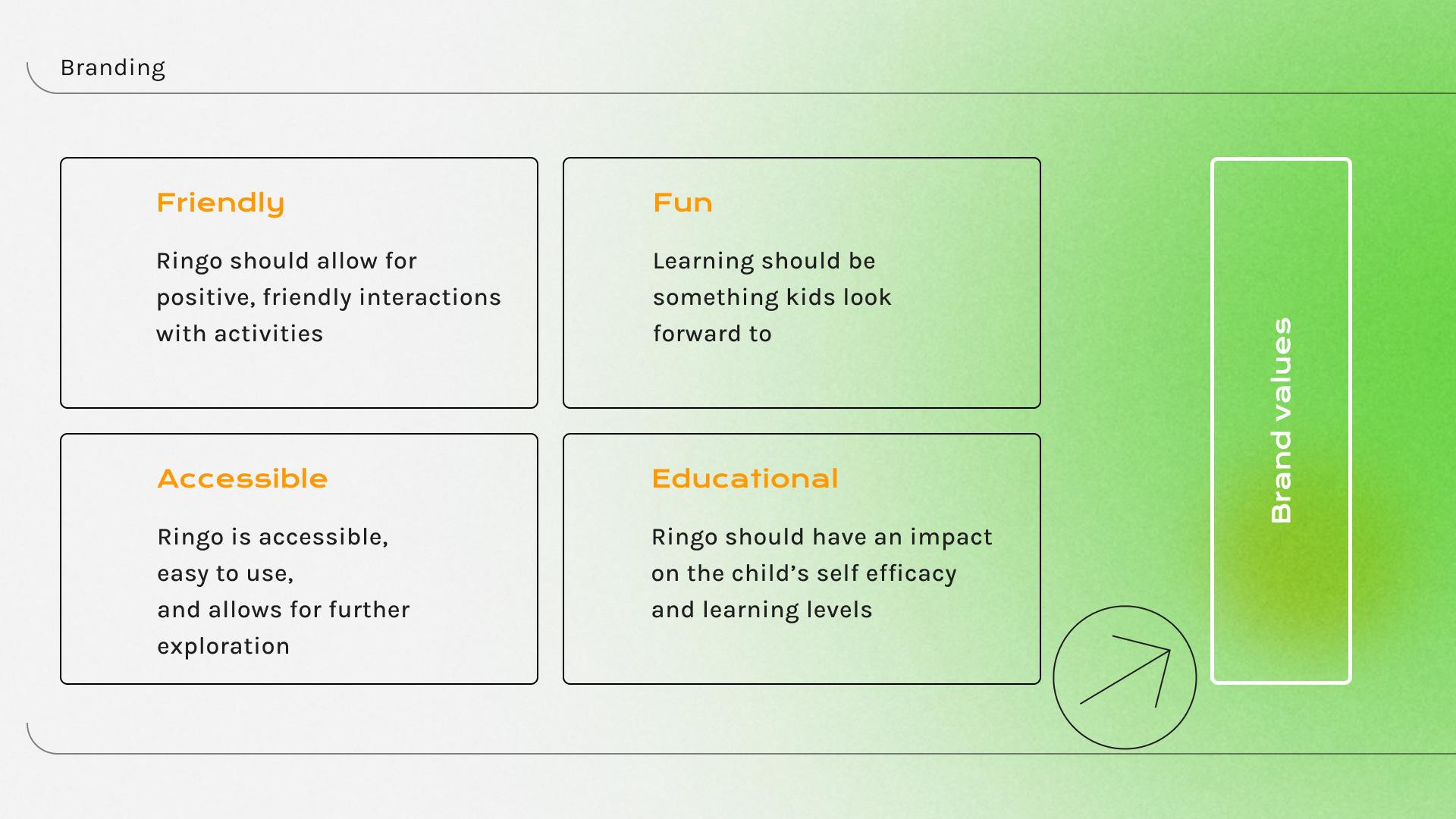
The design process began with preliminary sketches and moodboards to sculpt a playful, fun product. To create a cohesive brand, I focused on four core values to guide the product's visual design.
Logo & Brand Design
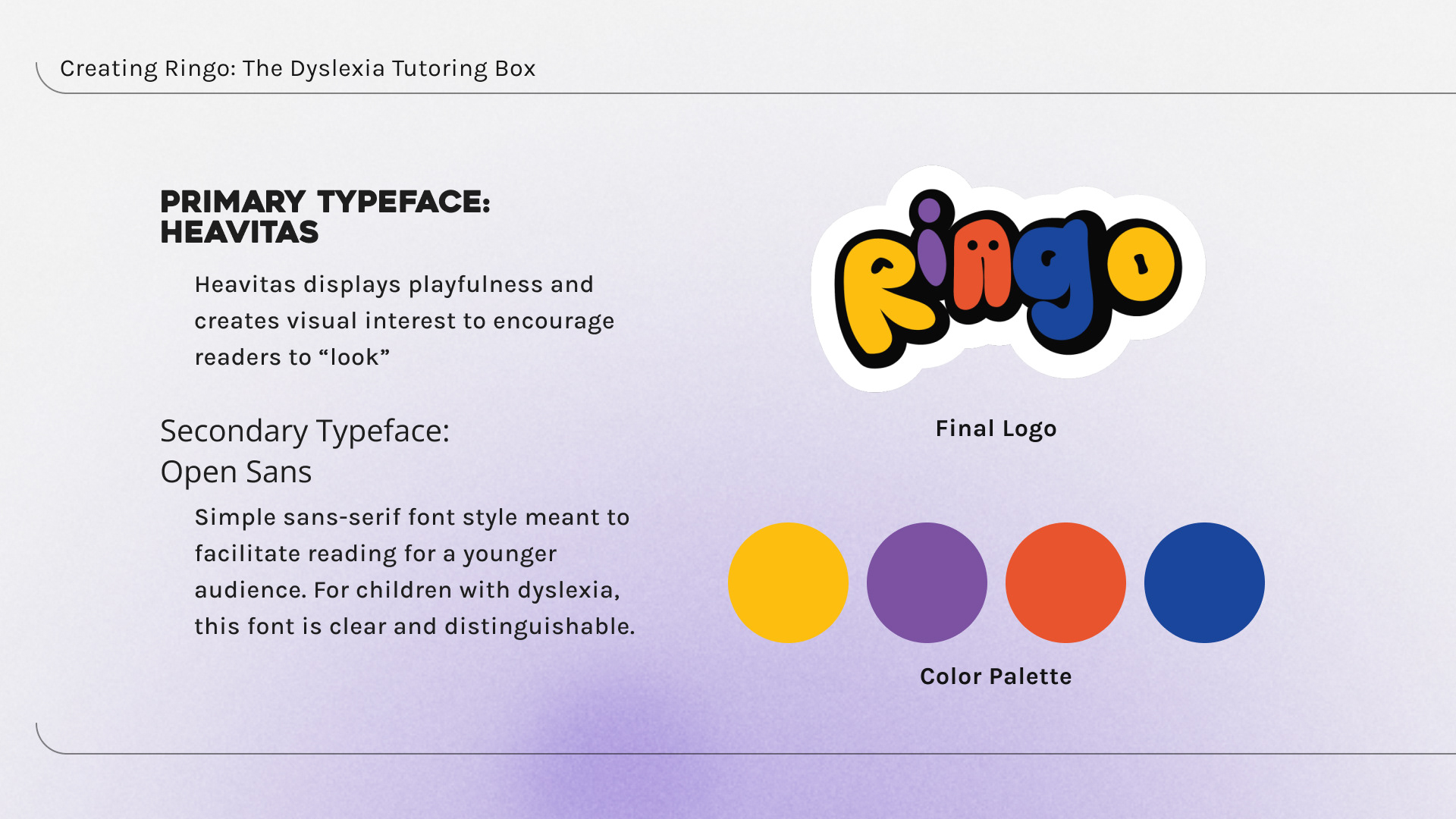
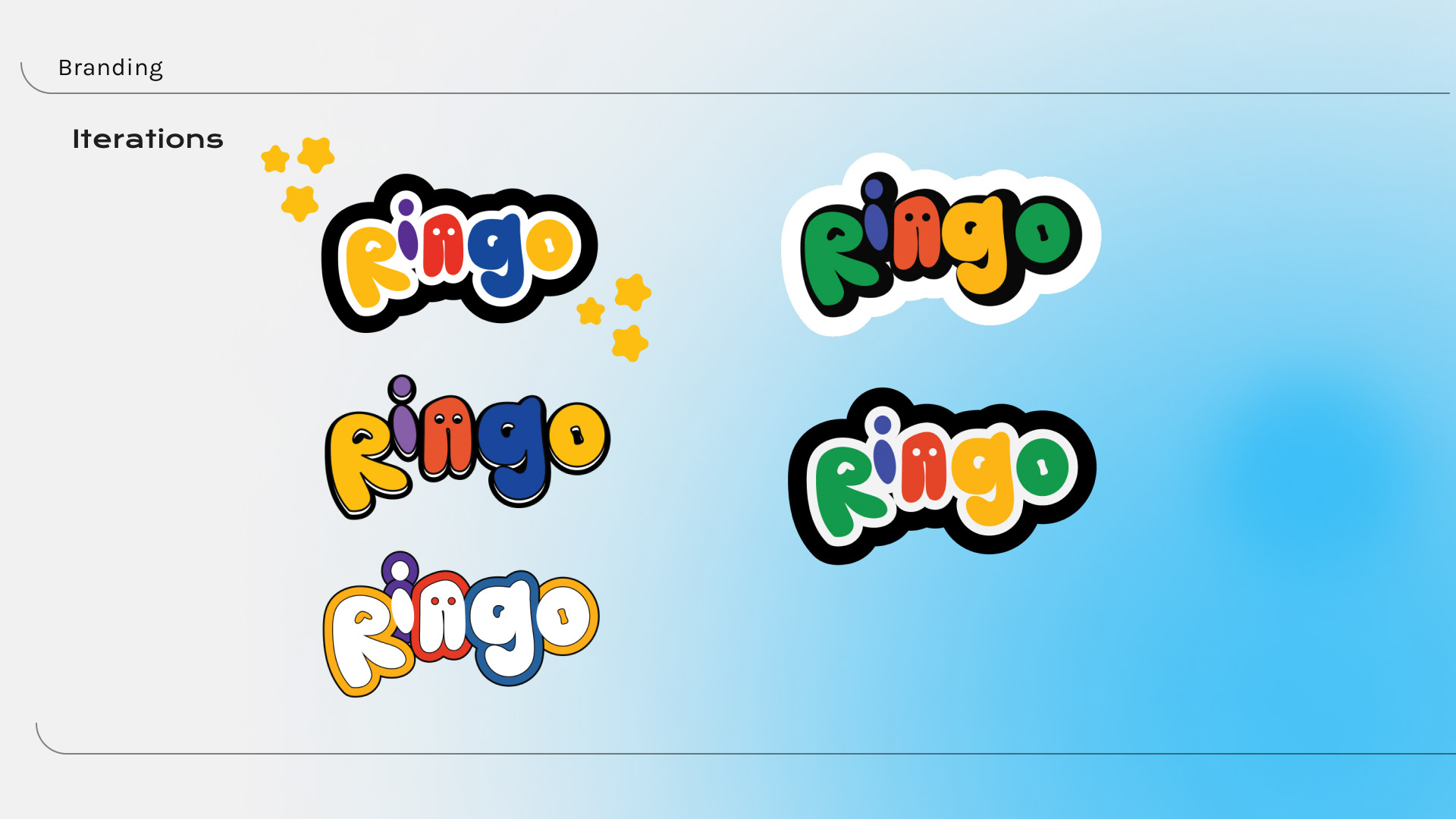
Meaning “apple” in Japanese, the name Ringo references being supplemental to your child’s learning (like eating a healthy snack!).
To keep Ringo activities exciting for kids, the final product would use a changing monthly theme. That way, each month delivers a completely different experience for families. The logo was created with this in mind, drafted as a canvas to be further iterated in the future. For the initial prototype, a space theme was chosen based on the MVP features.
Packaging Design
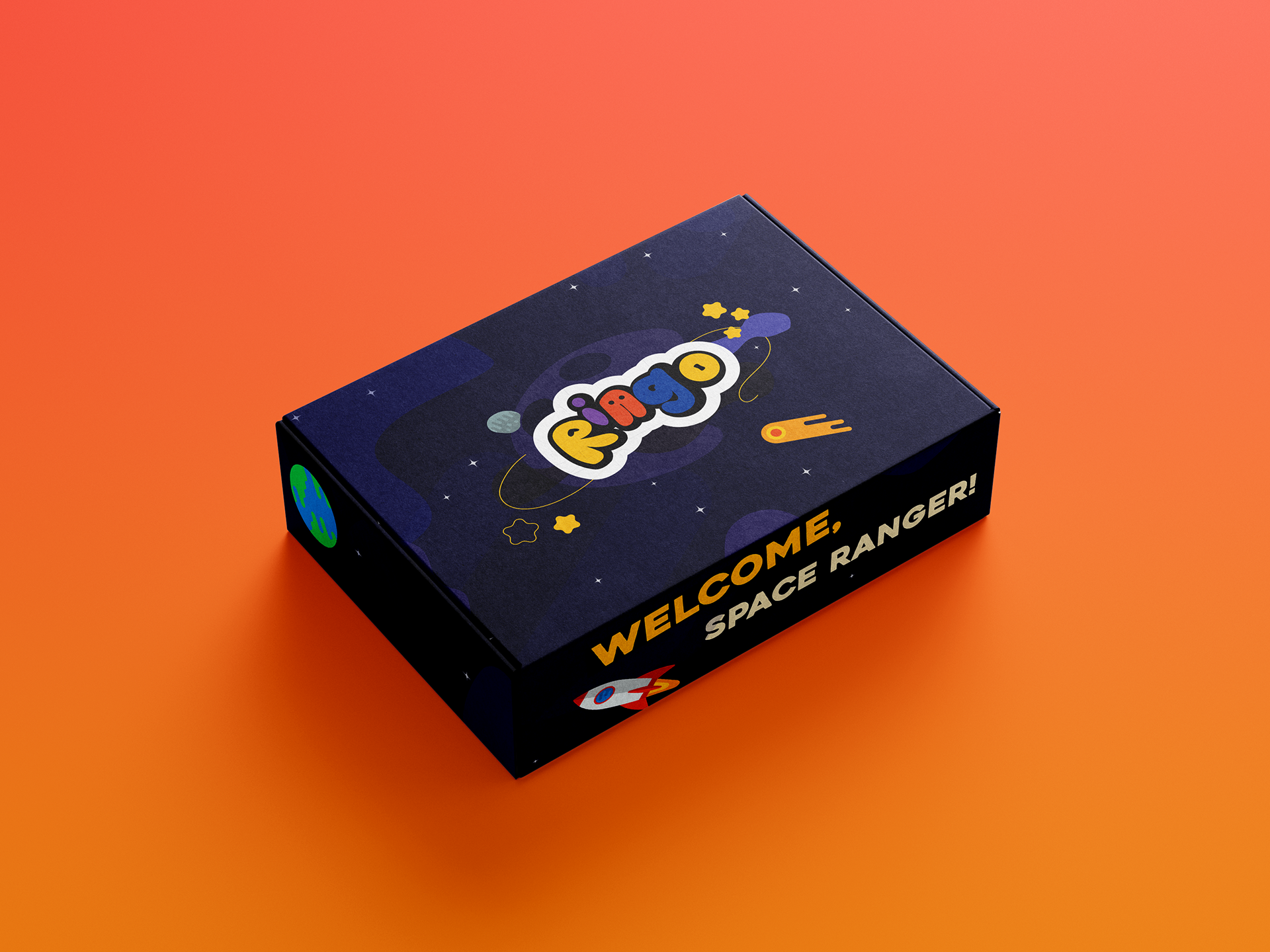
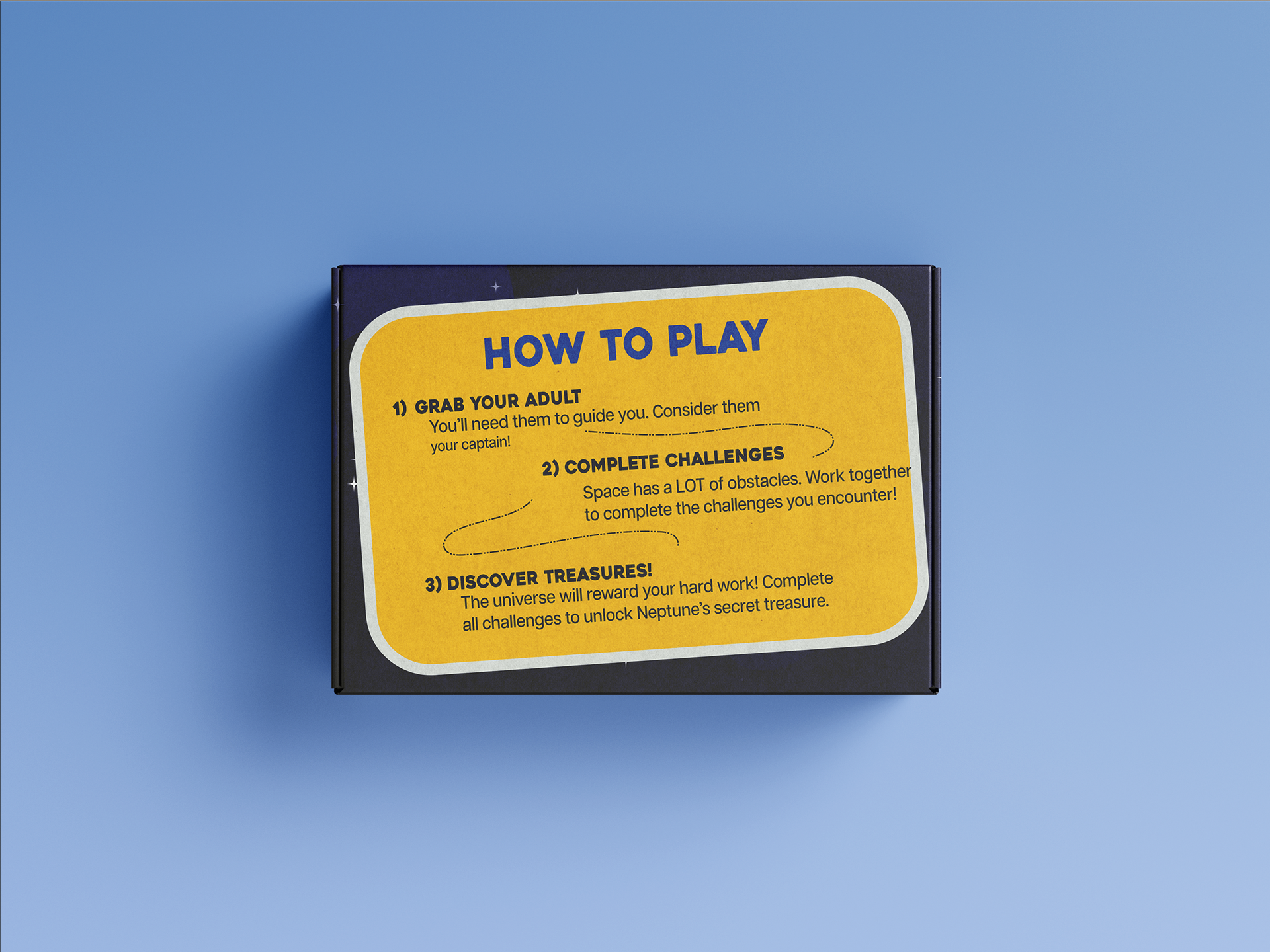
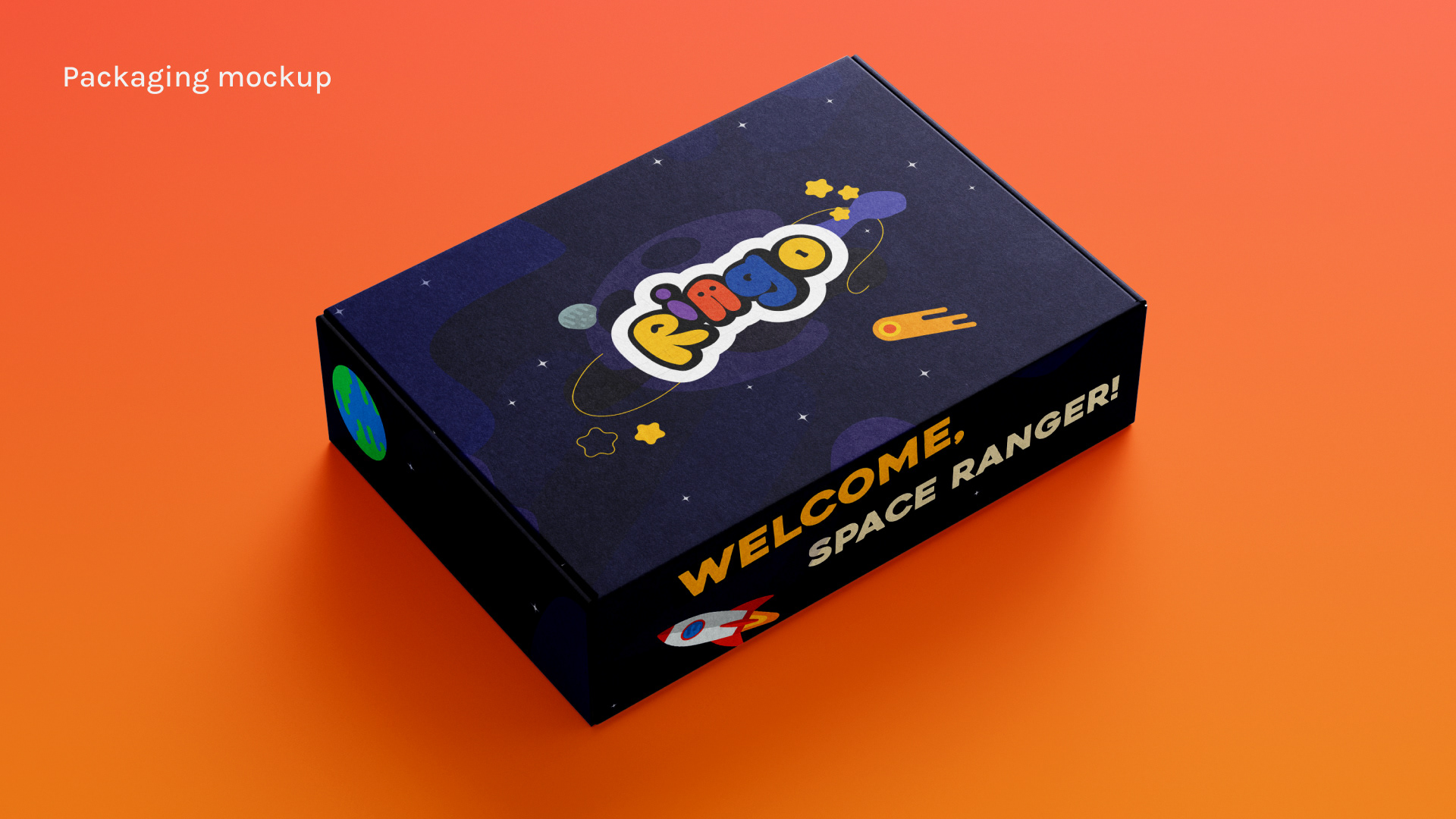
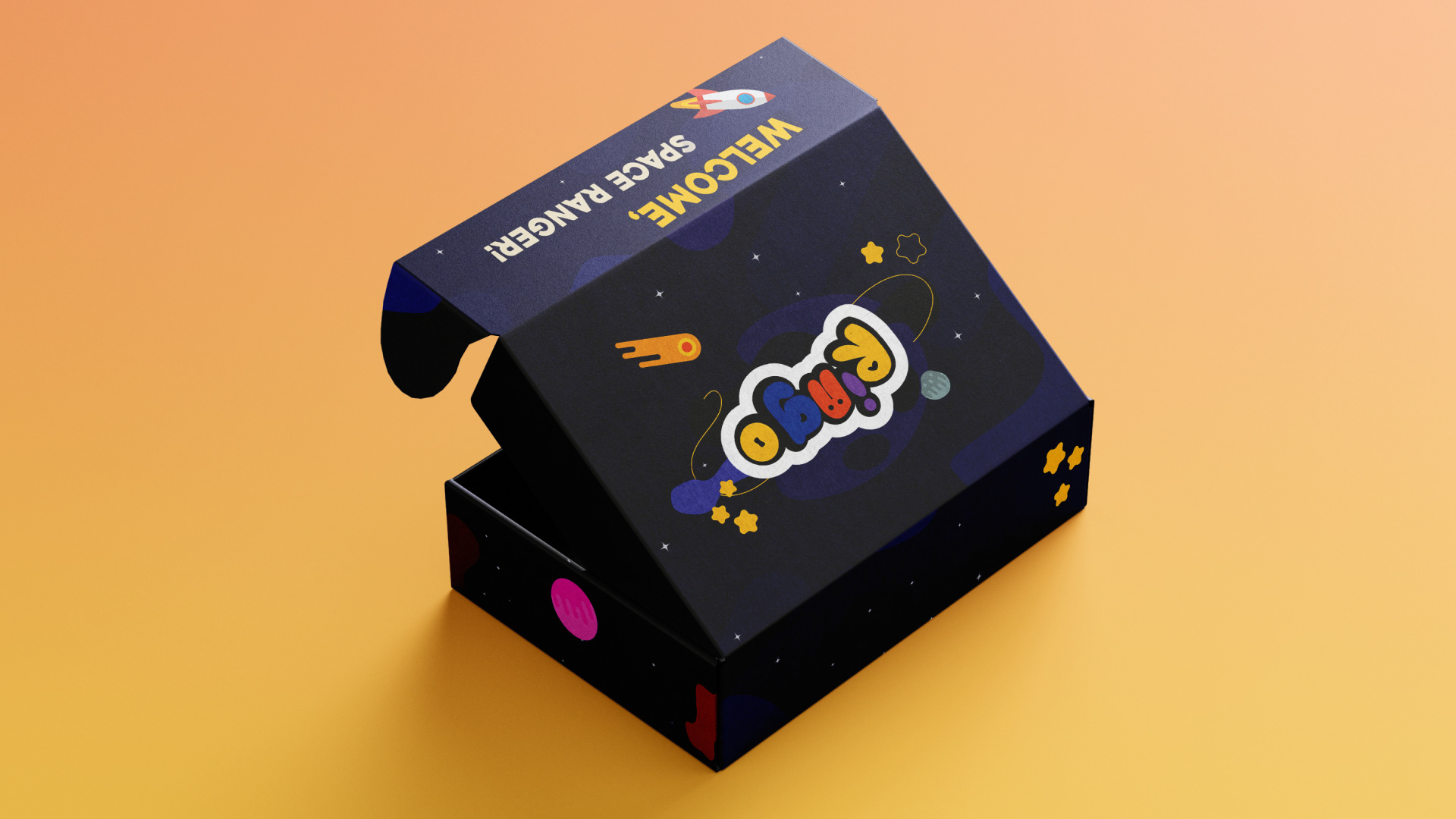
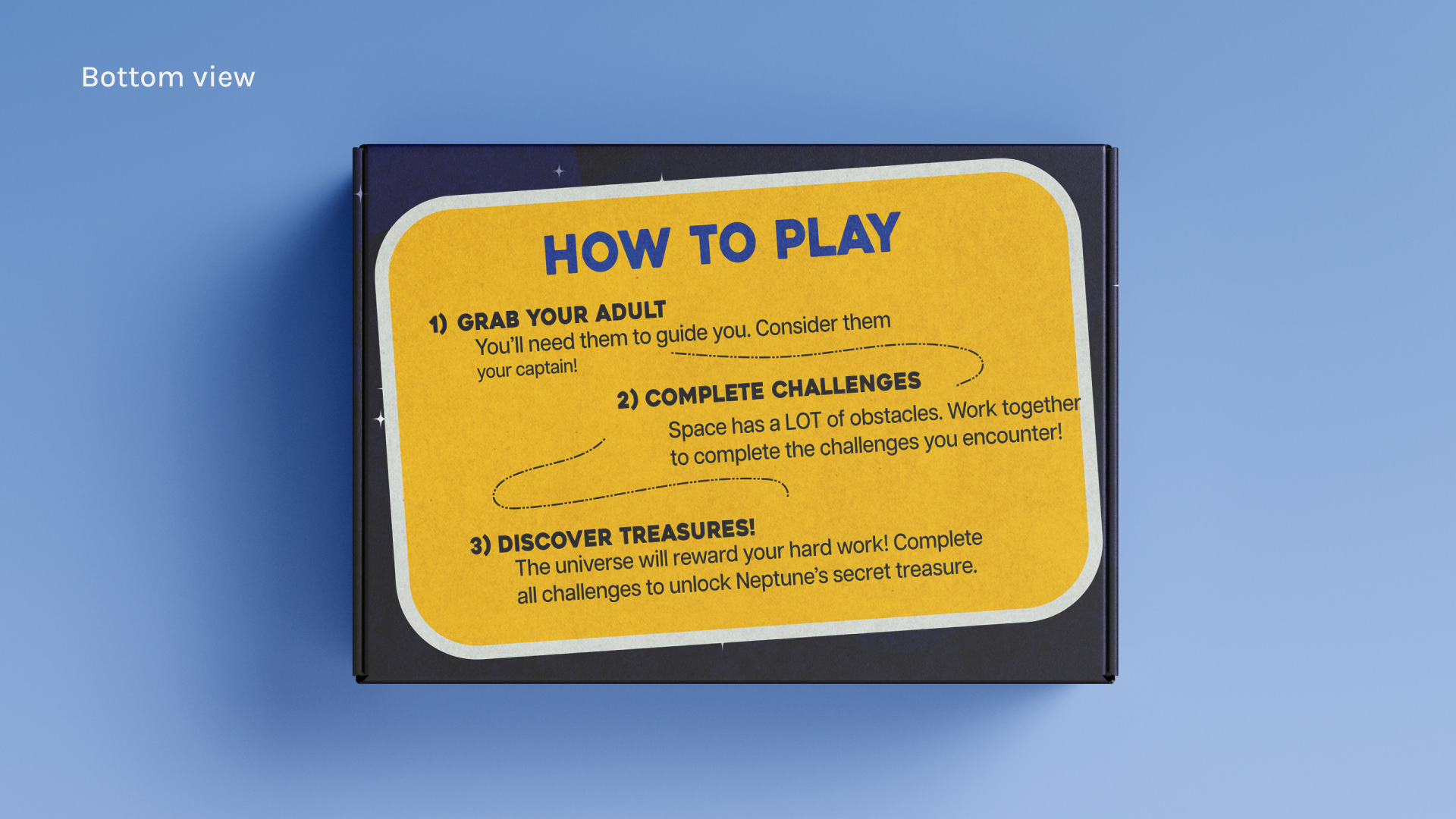
Similar to the logo process, packaging ideas were first drafted using Procreate. Using manufacturing measurements, I created a prototype to send for sampling.
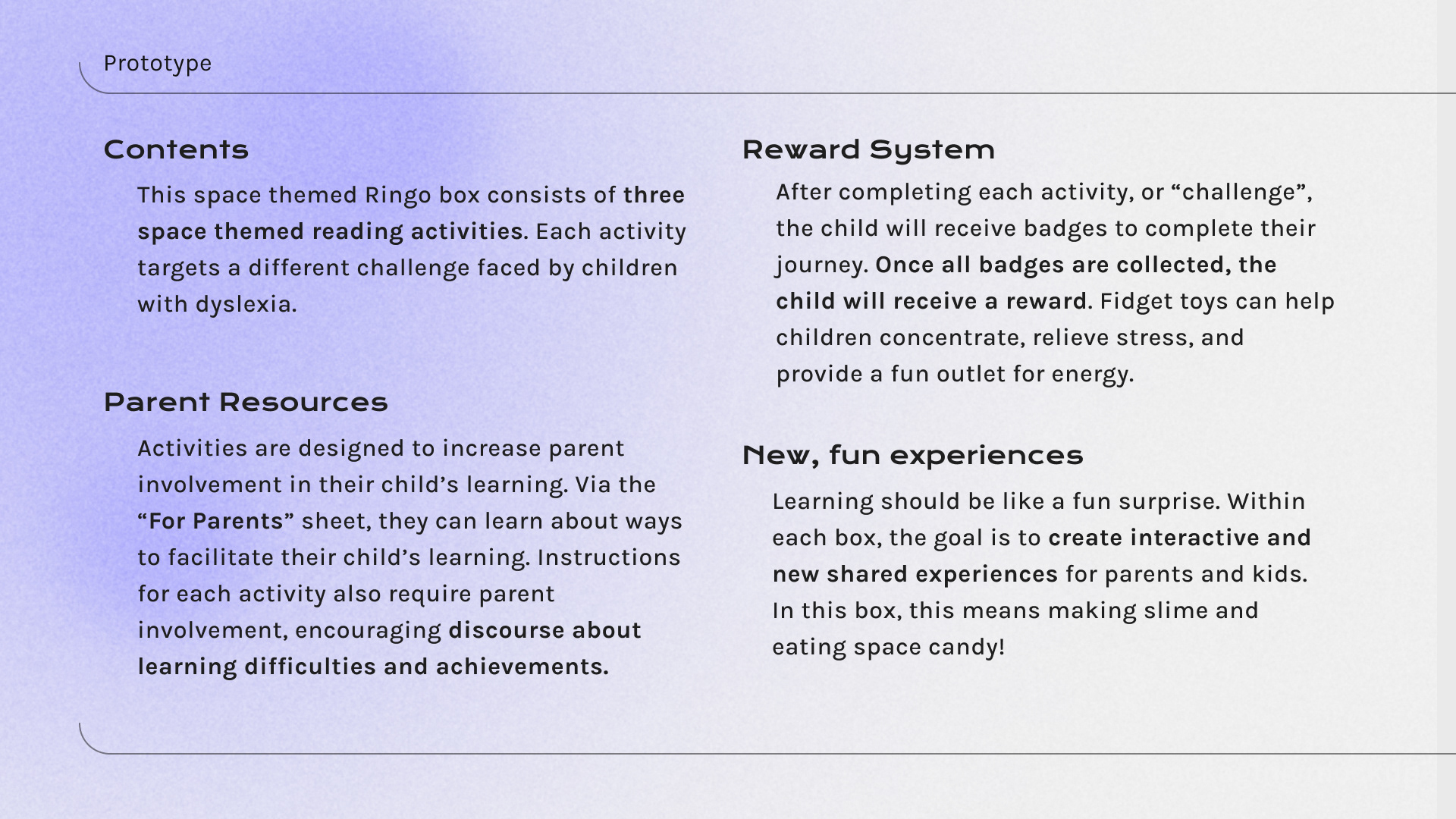
Final Renderings
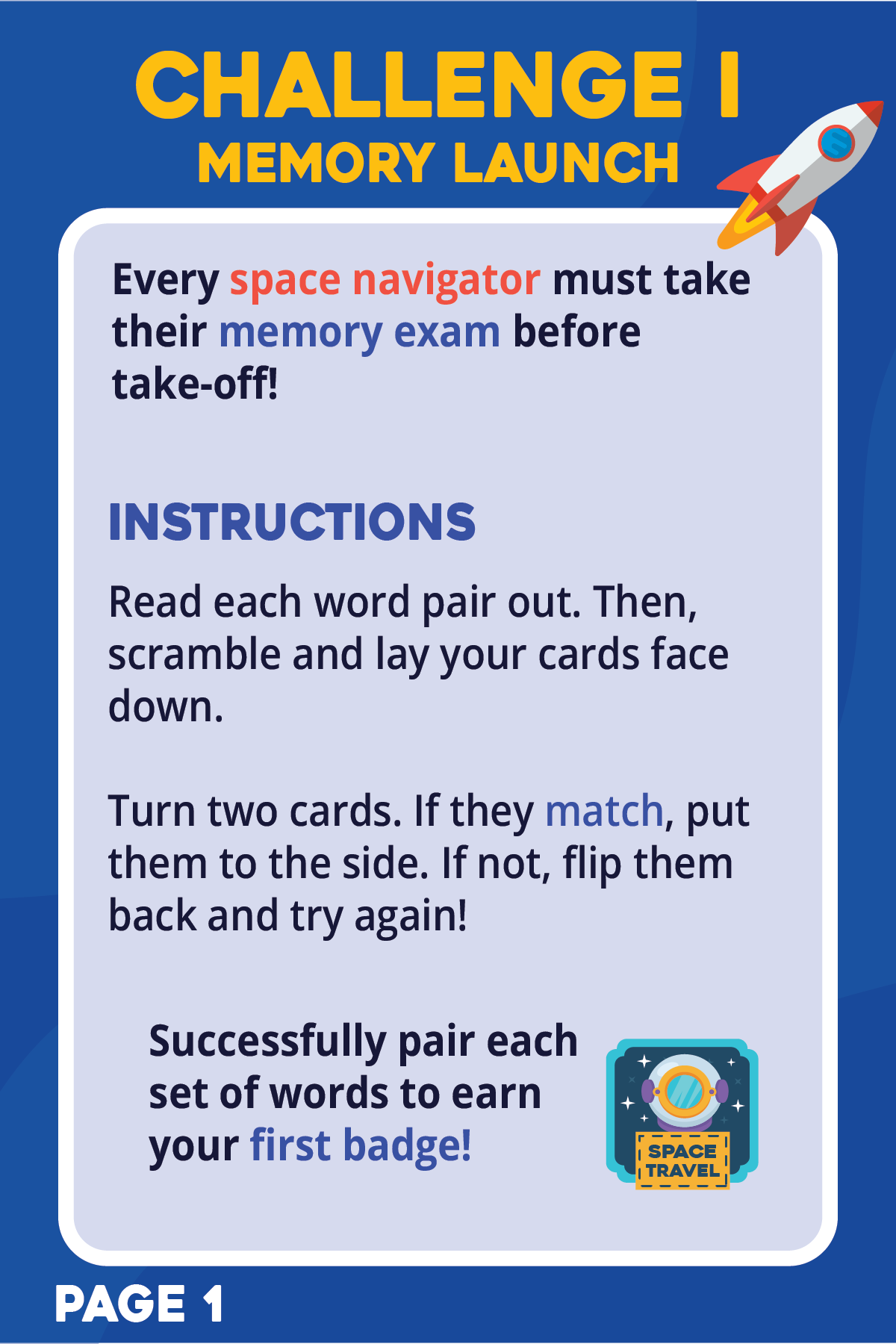
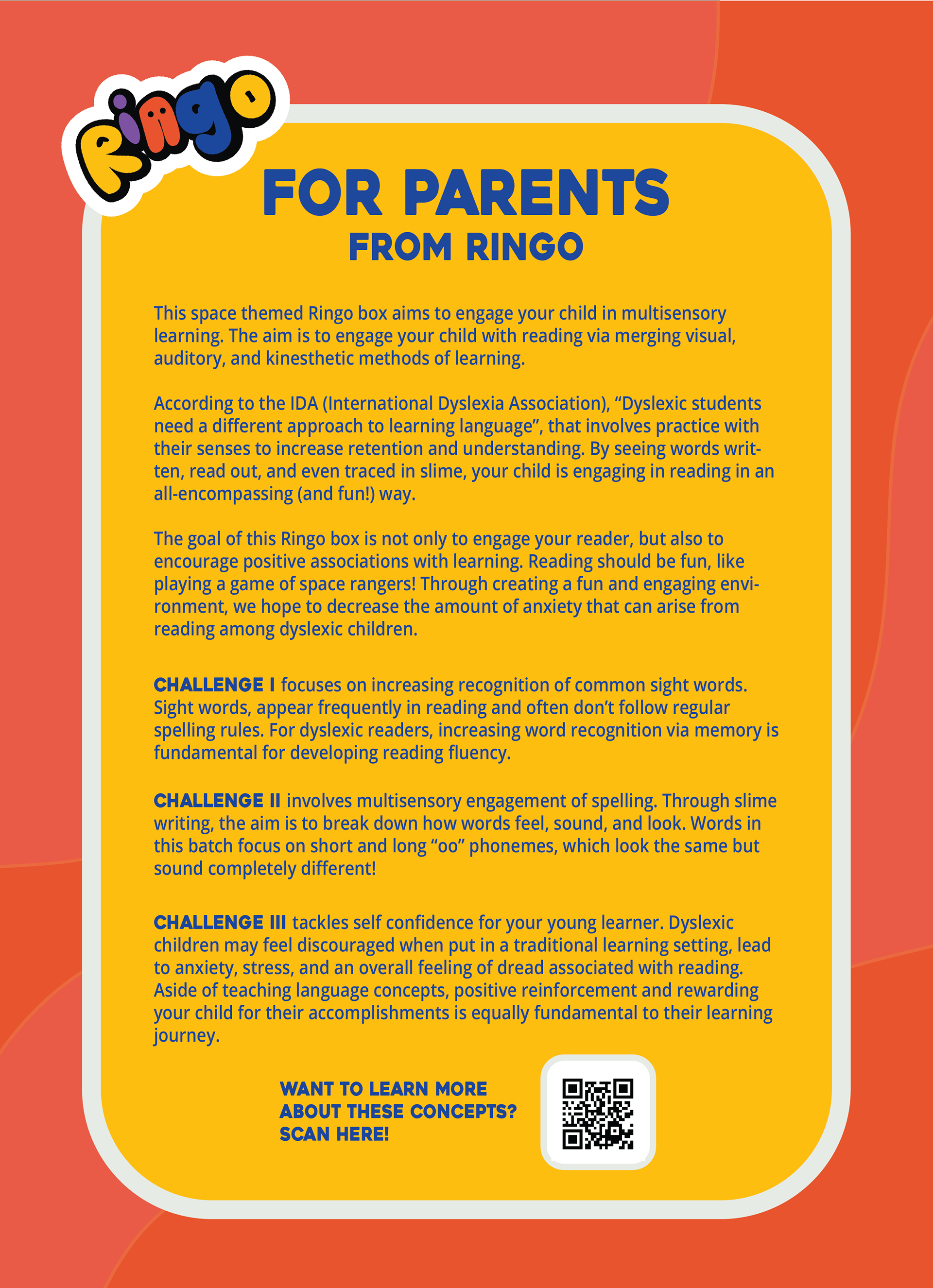
Final Printouts
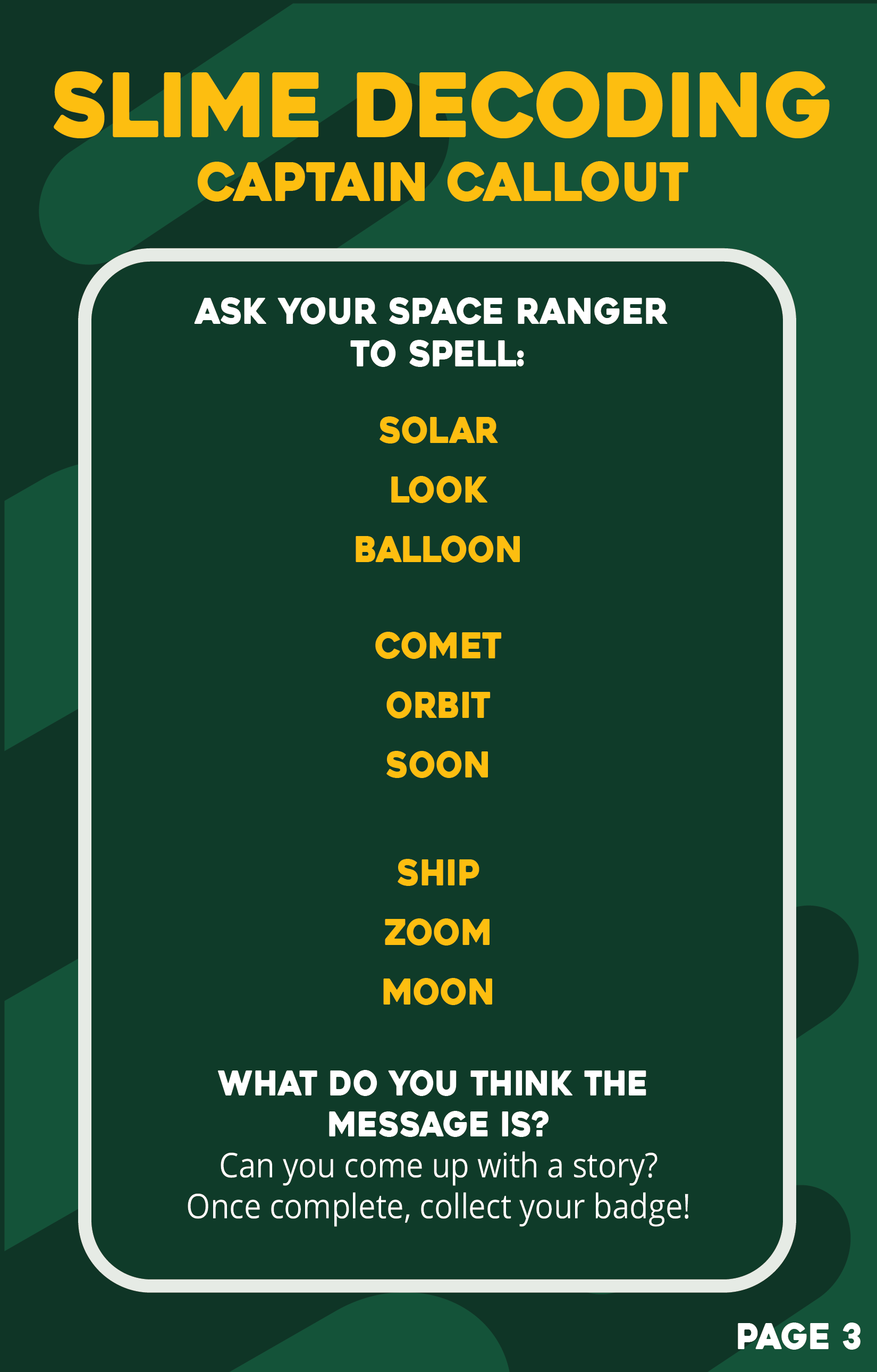
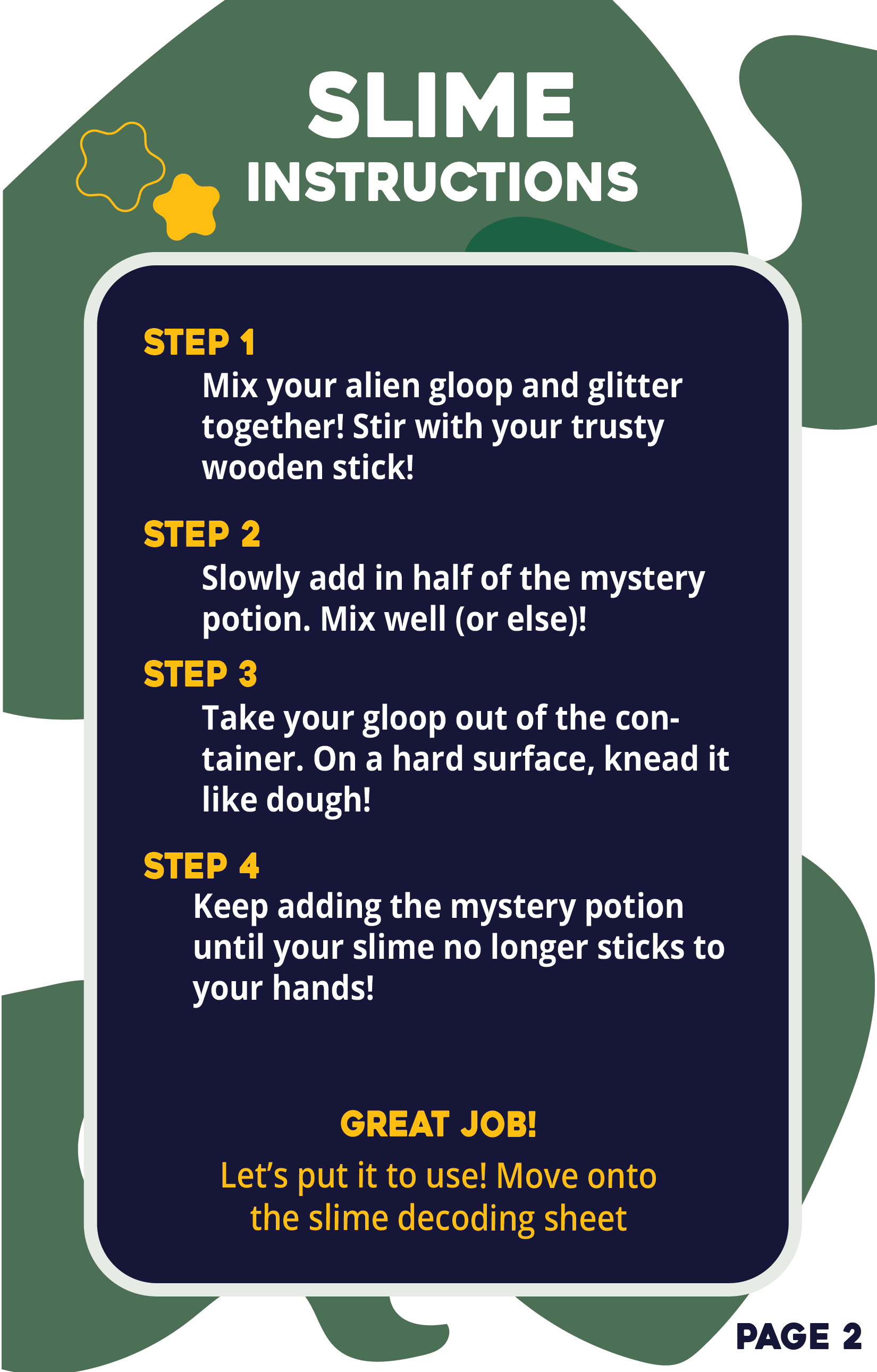
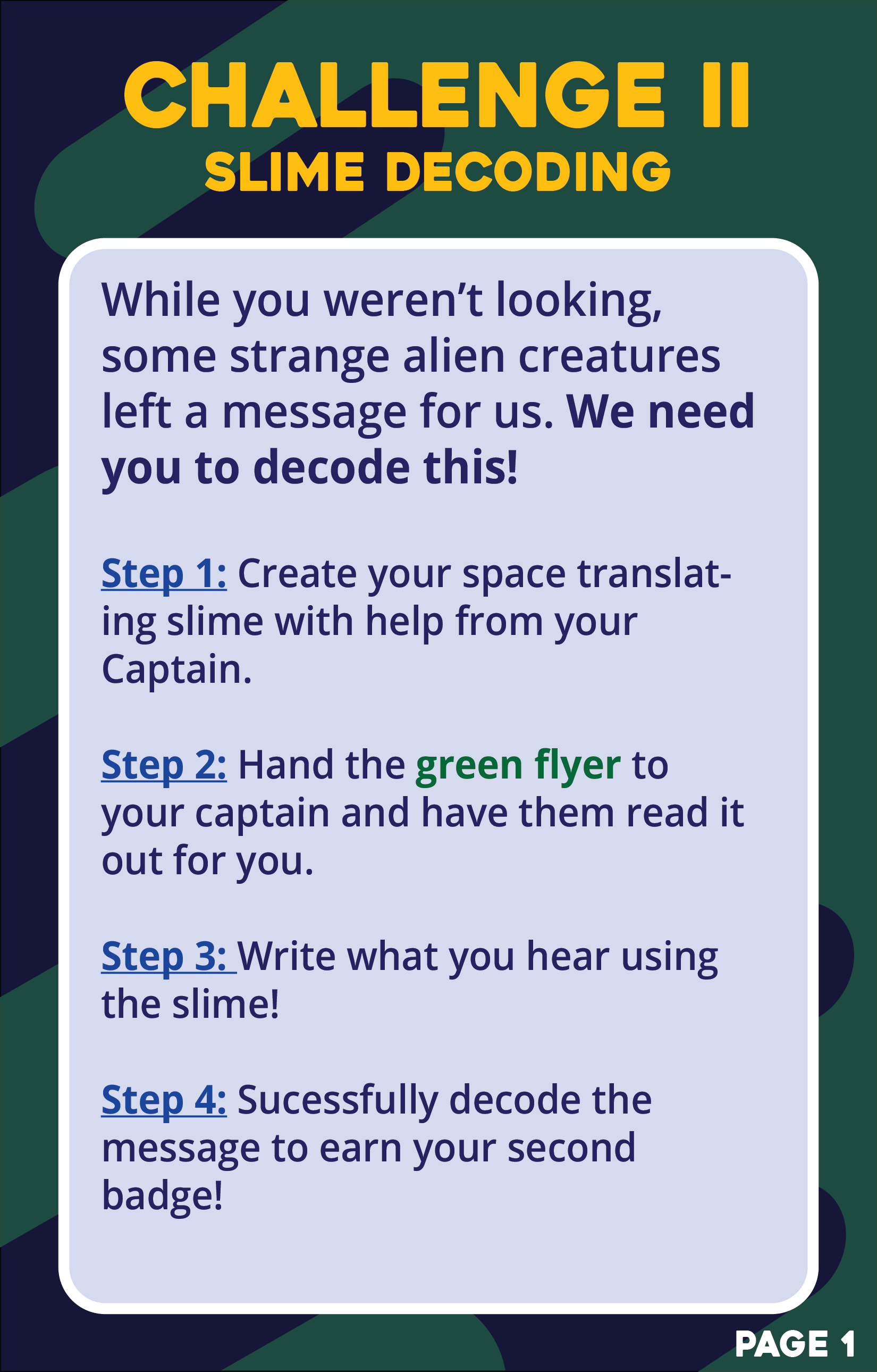
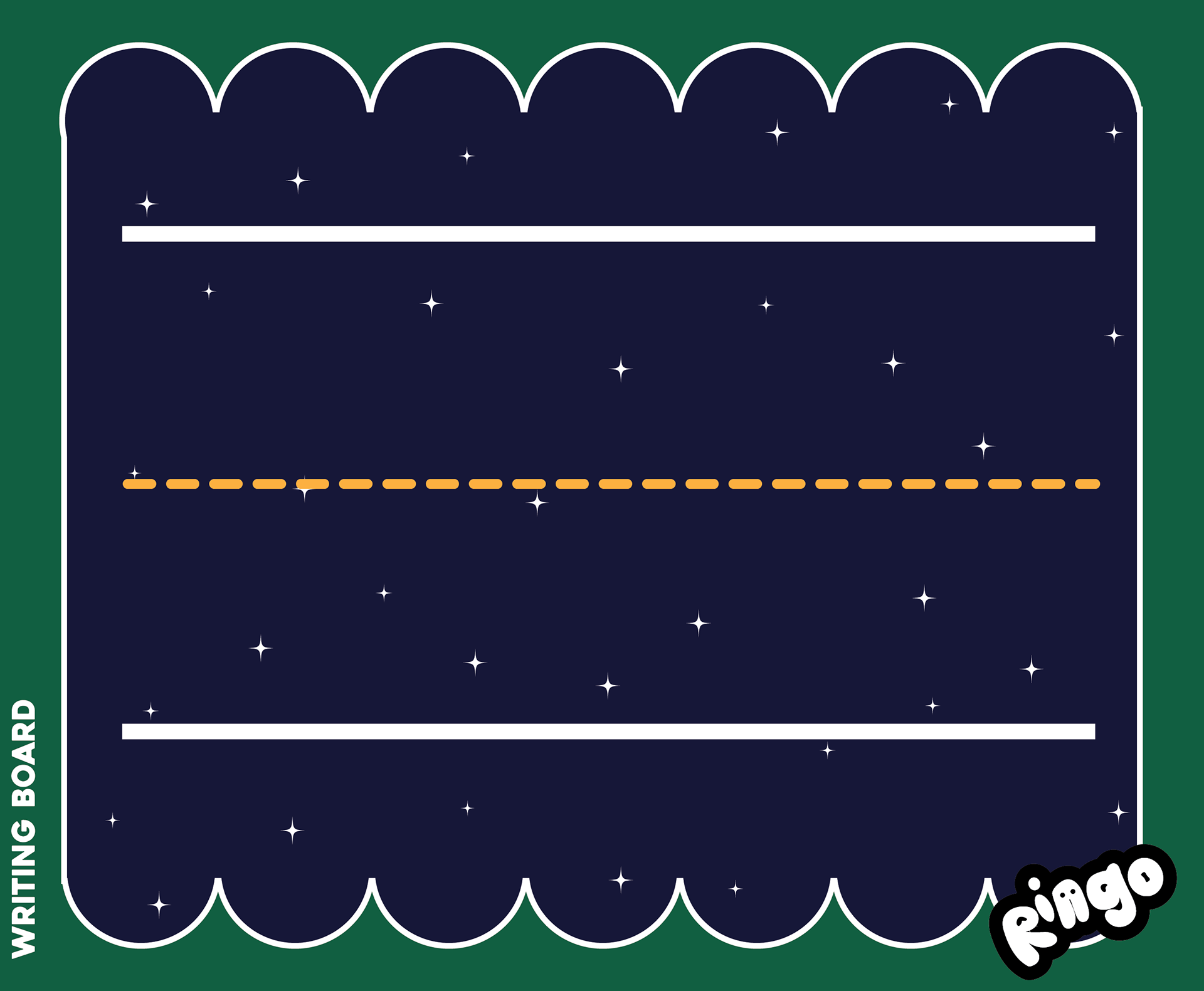
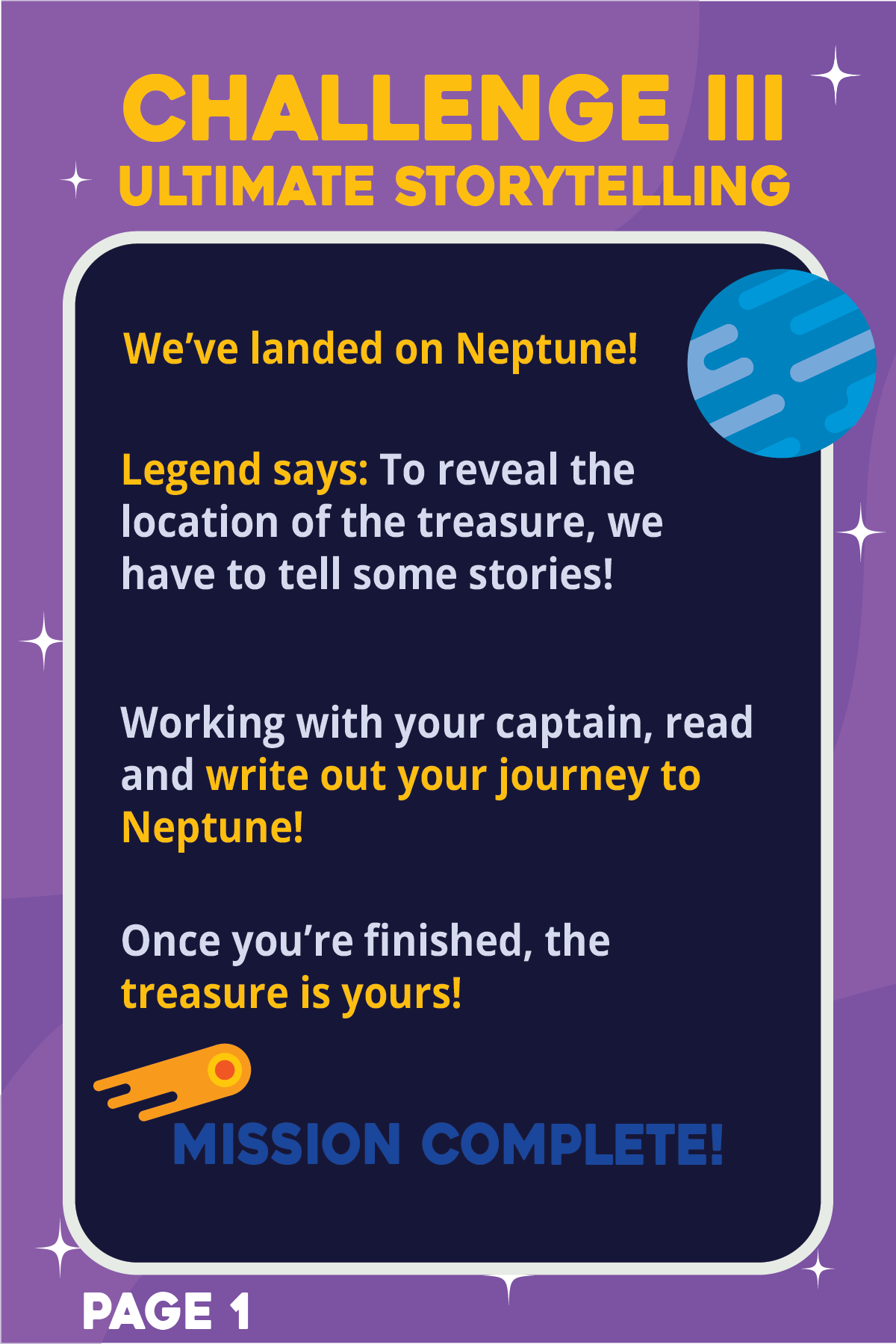
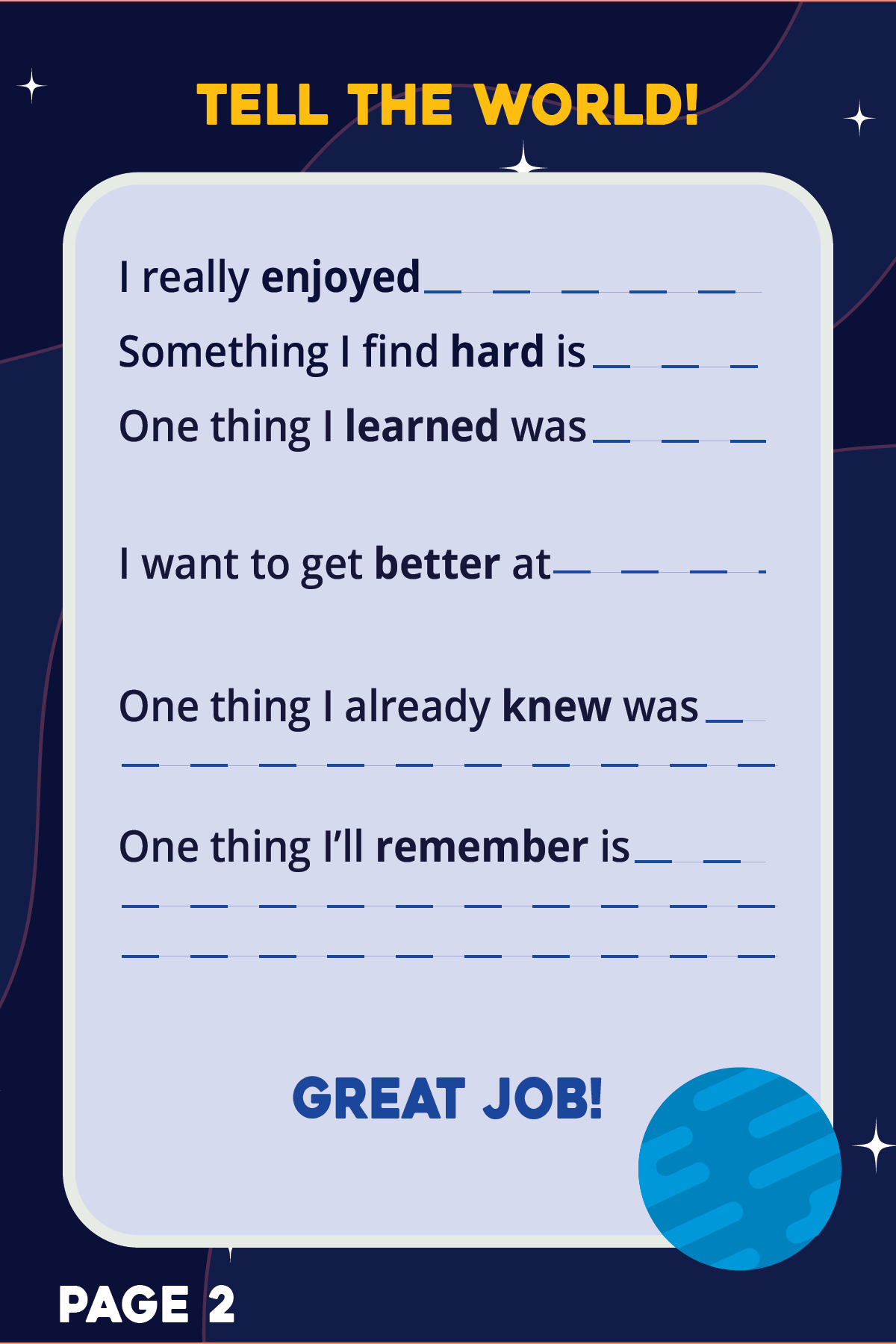
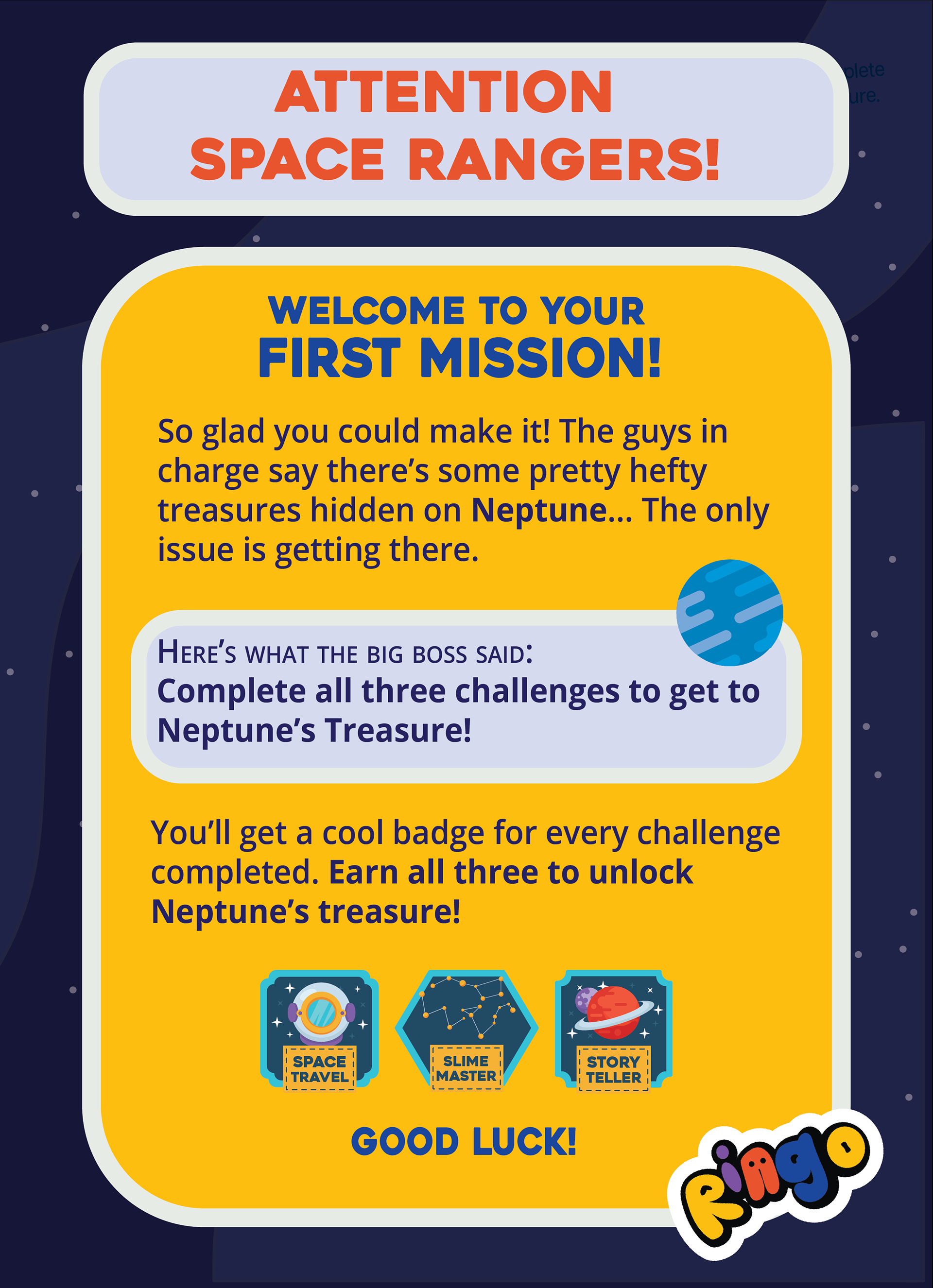
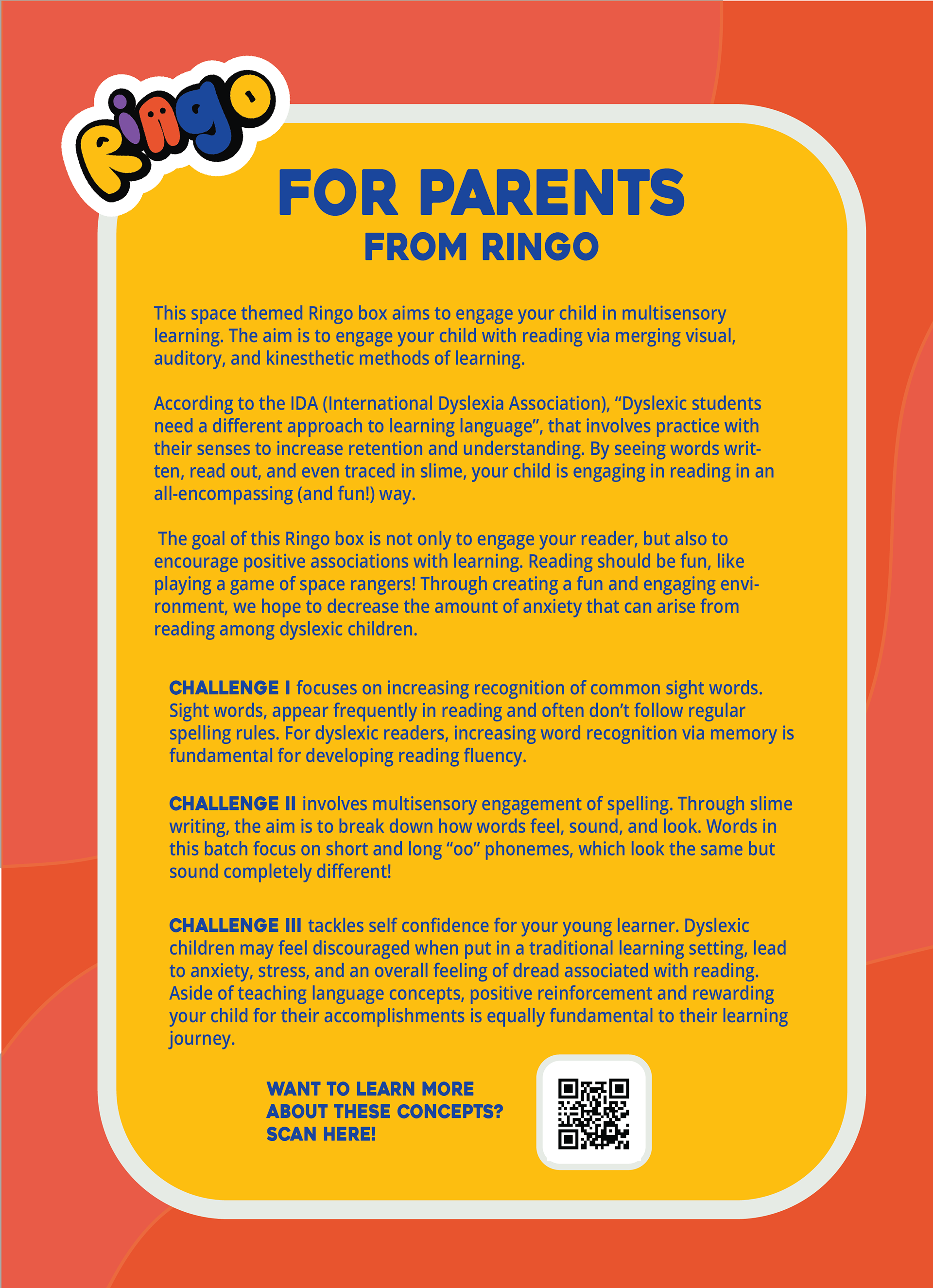
Reflections & Feedback
After a run-through of the product, I was able to reflect on the success of the project. Previously, I had described success measures as follows: for Ringo to be a successful prototype, it must hold the subject's attention while teaching them the underlying reading lessons. After completing all three activities, the child should be able to recount what they learned.
A trial run was conducted with my 8-year old nephew. While there were some pauses where the learning materials were slightly confusing, the overall test was successful. The subject was able to summarize the lessons learned.
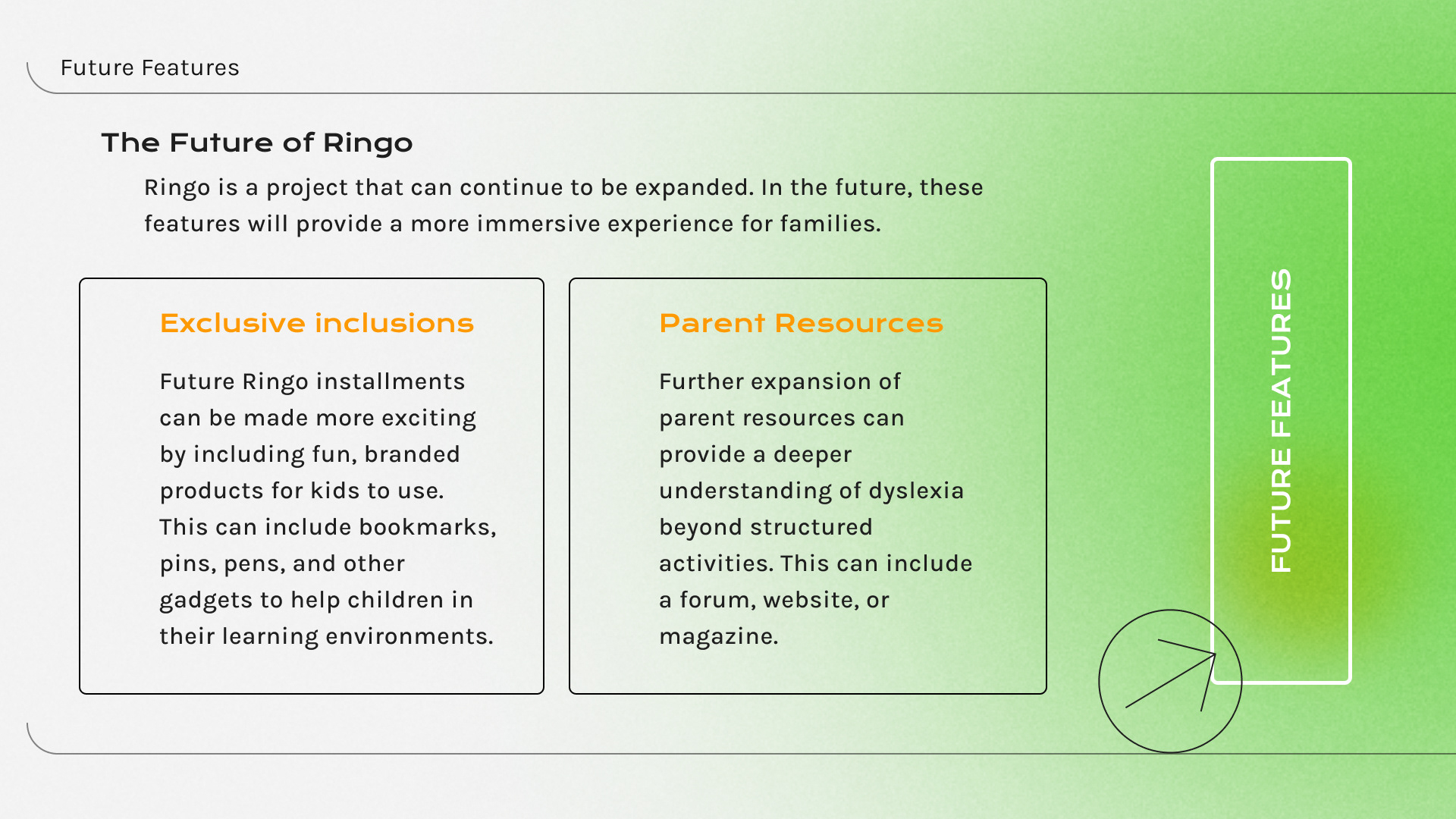
Upon reflection, further iterations should account for different age groups. There is a lack of customization for included materials, which can lead to a very limited range of learning. Instead of having just one box, future Ringo prototypes can include basic and advances activity versions.
Likewise, peers suggested expanding on parent resources. Instead of including a single flyer, Ringo could benefit from a more diverse range of resources.